Clothing Icons Graphics Review for Digital Sellers
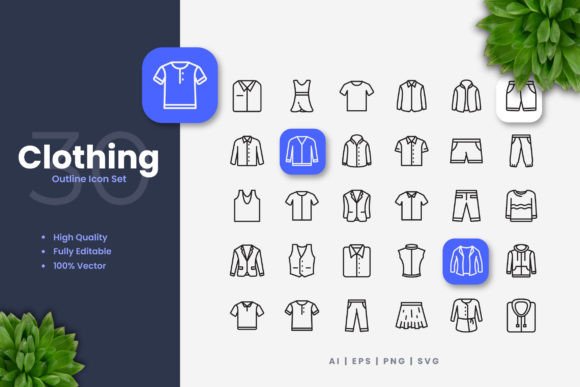
As a digital product creator who has spent years refining listings on Etsy and Creative Fabrica, I know that the difference between a listing that gathers dust and one that converts often comes down to the quality of the foundational assets. Recently, I evaluated a Clothing Icons set to see if it could serve as a versatile backbone for a new seasonal collection. The premise is straightforward: a Simple and clean icon design intended for broad application across websites, mobile apps, books, social media, infographics, flyers, print, banners, posters, and many more contexts. But for those of us selling finished goods or templates, "clean" needs to mean something specific. It needs to mean scalable, editable, and commercially viable.
First Impressions and Visual Personality
When you first open the asset folder, the immediate takeaway is the minimalist aesthetic. This isn’t a hand-drawn, rustic sketch style, nor is it overly ornate or baroque. It sits firmly in the modern, commercial space. For a small business owner looking to build a cohesive brand identity, this simplicity is a double-edged sword. On one hand, it offers incredible flexibility; on the other, it requires thoughtful pairing to avoid looking generic.
The visual personality of these icons is professional yet approachable. They feel suitable for a boutique clothing store, a fashion blogger’s newsletter, or a print-on-demand shop focusing on minimalist apparel. If your target audience is looking for cute, kawaii, or heavily decorative elements, this might not be the right fit. However, if you are targeting creative entrepreneurs, designers, or content creators who value visual hierarchy and clarity, these graphics deliver exactly what they need. The stroke weight appears consistent, which suggests that when you edit the SVG file, the integrity of the shape will remain intact—a critical factor for Cricut users who rely on precise cutting lines.
Real-World Application: Building a Seasonal Collection
To truly test the utility of these Clothing Icons, I imagined them within the context of preparing a launch for an online shop. Let’s say I am creating a "Wardrobe Essentials" bundle for Etsy sellers. Here is how these assets would function across different product types:
- SVG Products and Cricut Projects: Because the design allows you to resize, change color, or edit stroke weight, these icons are perfect for vinyl cutting. A seller could create a series of t-shirt designs where the icon is the central focal point, surrounded by bold typography. The clean lines ensure that weeding (removing excess vinyl) is hassle-free, reducing customer complaints about intricate cut files.
- PNG Design and Sublimation: For mug designs or tote bag prints, having high-resolution PNG versions with transparent backgrounds is non-negotiable. These icons can be layered onto mockup previews to create realistic product shots. When used in sublimation designs, the clean vector nature ensures that scaling up to large formats like banner posters does not result in pixelation.
- Canva Templates and Digital Downloads: Many users buy templates to save time. By including these icons in a Canva template kit for social media graphics, you provide immense value. A user can drag and drop an icon into their Instagram post layout, knowing it aligns perfectly with the rest of the design system. This versatility makes the asset a strong candidate for a design bundle aimed at bloggers and small business branding.
- Printable Wall Art and Nursery Prints: While the theme is clothing, the abstract nature of simple icons allows them to be repurposed. In a nursery setting, these could represent "getting ready for bed" or "playtime." When paired with a soft script font or a playful display font, the clipart transforms from a technical icon into a charming illustration element.
Enhancing Product Presentation and Trust
In the crowded landscape of a creative marketplace, your listing images must do the heavy lifting. High-quality design assets directly impact perceived value. Using Clothing Icons effectively in your marketing materials can boost click-through potential significantly.
Consider using these icons to create a unified visual language across your shop. If you sell planner stickers, you can use the icons as headers for different sections of a digital planner page. If you are selling greeting cards, the icons can frame the text, guiding the viewer’s eye to the message. This consistency builds customer trust. When a buyer sees that every element—from the thumbnail to the final download—is polished and professionally designed, they are more likely to leave a positive review and return for future purchases.
Furthermore, these assets support visual storytelling. A bundle of icons depicting laundry, ironing, and sewing can tell a story about home care without needing words. This is particularly effective for infographics or educational content sold as digital downloads. By organizing these graphics logically, you help your customers create more compelling content, which reflects well on your brand as a helpful resource rather than just a vendor.
Strategic Use Cases for Maximum Impact
While these icons are versatile, they shine brightest in specific scenarios. They work exceptionally well in themed bundles, such as a "Fashion Week" promo pack or a "Laundry Day" printable set. They are ideal for decorative layouts where white space is utilized effectively. However, they also serve as excellent accents in packaging design, adding a touch of professionalism to physical products like gift tags or thank-you cards included with handmade business orders.
Where Caution Is Required
No asset is perfect for every situation. As an experienced seller, I advise testing these Clothing Icons carefully before committing to a full product line. There are pitfalls to avoid:
- Tiny Sticker Details: If you plan to create tiny die-cut stickers, inspect the smallest details of the icons. Simple line art can sometimes become muddy when printed at very small sizes (under 1 inch). Always check the cut quality when relevant to your specific printer resolution.
- Low-Resolution Print Products: Ensure you are using the highest resolution available. Using a low-res PNG for a large format print, such as a poster or banner, will look unprofessional. Verify file resolution before publishing any listing.
- Crowded Thumbnails: On platforms like Etsy, thumbnails are small. If you combine too many icons in a single preview image, the visual hierarchy can break down, making the design look cluttered. Keep your mockup previews clean and focused.
- Dark Backgrounds: Test the icons against dark backgrounds. Since these are likely black or dark-colored strokes, they may disappear on navy or black mockups unless you invert the colors. Weak contrast can ruin the appeal of a design, so always proof your colors.
- Text-Heavy Templates: These icons are meant to complement text, not compete with it. Avoid placing them over busy patterns or dense blocks of text, as this dilutes the clean aesthetic that makes the asset appealing in the first place.
Practical Seller Notes for Implementation
Before you upload your final files to your shop, follow this checklist to ensure a smooth experience for both you and your customers:
- Test on Real Mockups: Don’t just view the icons on a white screen. Place them on realistic product mockups, such as a folded t-shirt or a ceramic mug, to see how they translate to physical form.
- Background Checks: Preview the design on both white and dark backgrounds to ensure versatility. Offer variations in your download if necessary.
- File Organization: Organize files clearly for customers. Provide separate folders for SVG, PNG, and JPG files. Label them intuitively (e.g., "Hanger," "Shirt," "Jeans") to enhance user experience.
- Font Pairing: Experiment with different typefaces. These icons pair well with serif fonts for a classic look, sans-serif fonts for a modern vibe, and handwritten fonts for a personal touch. Display fonts can add emphasis for sale announcements.
- Licensing Verification: Most importantly, confirm commercial license terms. Ensure you have the right to sell finished products created with these assets. Some licenses restrict reselling the raw files themselves, so make sure your offerings comply with the provider’s guidelines.
In conclusion, Clothing Icons offer a robust foundation for digital product creators who prioritize clarity and modern aesthetics. By understanding their strengths and limitations, you can integrate them into a diverse range of products—from t-shirt designs and mug designs to social media graphics and printable wall art. With careful testing and strategic presentation, these graphics can elevate your shop’s professionalism and drive sales.