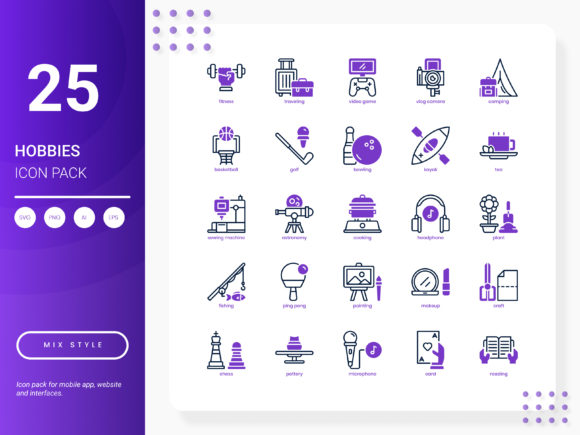
Hobbies Icon Pack: A Designer’s Embroidery Review
As a designer who spends half my life staring at stitch charts and the other half trying to sell finished goods, I have learned that not all digital assets translate well to thread. There is a distinct gap between a graphic that looks crisp on a 4K monitor and one that holds its shape after three wash cycles in a home washing machine. This is why I approach every new embroidery file with a mix of optimism and skepticism. Recently, I pulled the Hobbies Icon Pack off the shelf to evaluate whether these 25 stylish icons could survive the transition from screen to fabric for real-world projects.
The Hobbies Icon Pack is categorized under Icons and Graphics, which immediately sets certain expectations. It is composed of 25 stylish icons that showcase the most popular services and ideas. While the original description suggests it is perfect for website design, mobile applications, presentations, analytical reports, and infographics, my job is to determine if it has legs in the world of machine embroidery design. Can these clean, vector-style shapes withstand the tension of a hoop and the friction of a needle?
First Impressions and Visual Personality
When you first open a pack like this, the layout matters. The Hobbies Icon Pack presents a cohesive visual language. The shapes are rounded, modern, and uncluttered. For an embroidery artist, simplicity is often the enemy of complexity, but here, simplicity is the key to success. The icons do not rely on intricate shading or tiny gradients, which are nightmares for digitizing. Instead, they rely on bold outlines and clear negative space.
This creates a mood that is professional yet approachable. It feels like a brand asset designed for clarity. When I look at these designs, I don’t see decorative flourishes; I see communication. They feel suited for custom apparel where the message needs to be read instantly. The visual personality is neutral enough to fit into a minimalist nursery theme but structured enough to work for a corporate team-building event. It strikes a balance that many design assets fail to achieve.
Real-World Application: The Tote Bag Test
To truly judge an icon pack, I need to put it to work. Let’s imagine a specific scenario: I am preparing a batch of custom embroidered tote bags for a local craft fair. These are meant to be sold as handmade product items for busy moms or students. I choose three icons from the pack—one representing reading, one for gardening, and one for cooking—to place along the bottom hem of a natural canvas bag.
Stitching them out, the first thing I notice is how well the satin stitch handles the outer edges of the icons. Because the lines are relatively thick, the thread lays flat without pilling. There is no jaggedness at the corners. On a textured fabric like canvas, these icons pop because they have enough "weight" to sit above the weave. If these were thin-line technical drawings, they would get lost. But as stylized graphics, they become focal points.
For an Etsy seller, this is crucial. Customers scrolling through listings want to see products that look polished. A clean row of hobby icons suggests a thoughtful, curated brand. It elevates a simple tote bag from a generic item to a personalized gift with intention. The versatility of having 25 options means I can mix and match themes—creating a "Coffee Lover" set or a "Weekend Warrior" set—without breaking brand consistency.
Performance on Different Garments and Surfaces
While the tote bag was a success, not every surface plays nice with icon packs. Let’s look at how the Hobbies Icon Pack performs on other common embroidery project surfaces.
- Sweatshirt Embroidery: On a fleece sweatshirt, the icons might sink slightly into the nap. However, using a heavier thread weight (like 40wt instead of 60wt) can help them stand out. The clean lines prevent the design from looking muddy against the fuzzy texture.
- Baby Embroidery: For onesies or burp cloths, the soft curves of these icons are gentle on the eyes. They avoid sharp, aggressive angles that might look harsh on baby gear. This makes them ideal for nursery decor or milestone blankets.
- Caps and Hats: Curved surfaces are tricky. If an icon has long horizontal lines, they may distort when stitched onto a curved cap front. I recommend keeping the placement centered or choosing smaller icons from the pack to minimize distortion on embroidered patches or hat fronts.
- Kitchen Towels: Linen or cotton tea towels are great candidates. The icons provide a nice contrast against the plain weave. They work beautifully as a series across the top edge, creating a rhythmic pattern that feels high-end.
Where to Use Caution
No design is perfect for every situation. As an experienced reviewer, I must point out where the Hobbies Icon Pack requires careful handling.
If you plan to use these icons in small hoop sizes (such as 4x4 inches or smaller), you need to inspect the smallest details. Some icons may contain tiny internal cutouts or very fine gaps between elements. In machine embroidery design, if two satin stitches are too close together, the needle will hit the existing thread, causing breaks or puckering. Always zoom in to 100% on your digitizing software to check for these potential collisions.
Additionally, be wary of using these icons on stretchy fabric without proper stabilization. Icons often require dense stitching to maintain their shape. If the fabric stretches during stitching, the final result may look warped. Use a sturdy cut-away stabilizer for knits. Also, avoid placing dense icon clusters on dark fabric unless you are using high-contrast threads. Dark backgrounds can swallow up lighter thread colors, reducing the readability of the graphic.
Practical Designer Notes for Success
Before you upload this pack to your shop or start producing for clients, follow these practical steps to ensure quality control.
- Test on Scrap Fabric: Never assume a digital file will stitch perfectly. Run a test on the exact fabric you plan to use. Check how the thread colors interact with the material. Does the white thread show up clearly? Does the black thread blend in too much?
- Check Stitch Density: Look at the stitch density in your software. If the fill areas are too sparse, the fabric will show through. If they are too dense, the fabric will pucker. Adjust the settings if necessary to find a happy medium.
- Review in Black and White: Convert your mockup to grayscale. This helps you see the true contrast and value of the design. Sometimes color hides poor composition.
- Confirm Licensing: This is critical for any commercial embroidery work. The description states the pack is perfect for web and print, but does it allow for physical resale? You must verify the license terms before selling finished items. If it is strictly for digital use, you cannot sell embroidered versions of these icons.
- Use Proper Stabilizer: The right stabilizer can make or break an icon. Hoop-down tear-away works for stable wovens, while sticky-back stabilizers are better for heavy items like hats or bags.
Final Verdict on Value and Appeal
The Hobbies Icon Pack succeeds because it understands the power of restraint. It doesn’t try to be everything to everyone. It provides clear, recognizable symbols that communicate ideas quickly. For the craft business owner, this means faster production times and fewer errors. For the customer, it means a product that looks professionally made.
It affects visual appeal by adding a touch of modernity to traditional crafts. It builds customer trust because the designs are consistent and neat. It enhances brand consistency because you can use the same icon style across your entire product line—from tags to packaging to the garments themselves.
Ultimately, the Hobbies Icon Pack is a strong addition to any designer’s library, provided you respect the limitations of embroidery. It is not a replacement for complex pictorial designs, but it excels as a branding tool. Whether you are making holiday gifts, wedding gifts, or everyday small shop product merchandise, these icons offer a reliable, stylish solution. Just remember to test, stabilize, and verify your rights before you start stitching.