Reviewing Coping with PTSD Word Concept Banner Set
As a designer who spends half my life staring at hoops and the other half worrying about stitch density, I don’t just look at an embroidery file and see pixels. I see tension, I see potential puckering, and I see how it will feel in a customer’s hands. When I first pulled up the Coping with PTSD Word Concept Banner Set, my immediate reaction wasn’t about the emotional weight of the message—though that is significant—but about its structural viability as a commercial machine embroidery design. This collection falls under Graphic Templates and Graphics, which usually signals a vector-based origin. That means we are dealing with isolated typography and iconography that needs to be translated into thread without losing its soul.
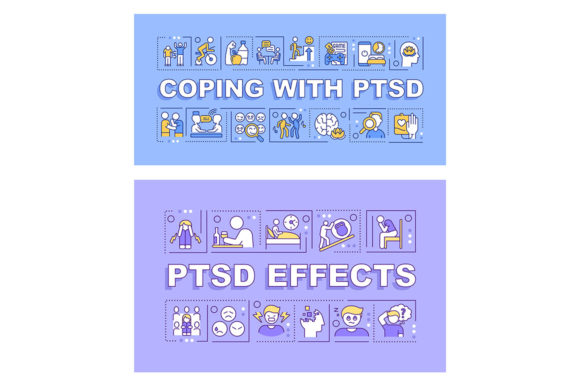
The core concept here revolves around overcoming psychotrauma, presented through infographics with icons on a color background. It uses an Arial-Black font, which is bold, clean, and generally safe for digitizing. But "safe" doesn't always mean "stitchable." My job is to tell you if this embroidery project actually works when you put it under the needle, or if it’s just another pretty picture that falls apart after one wash.
First Impressions: Mood and Visual Personality
The mood of the Coping with PTSD Word Concept Banner Set is undeniably supportive yet clinical. Because it relies on isolated typography and infographic-style icons, it feels modern, structured, and direct. It doesn’t scream; it states. For a handmade product, this translates to a piece that feels professional rather than overly sentimental. It sits somewhere between a mental health awareness campaign and a high-end boutique gift.
Visually, the banner layout suggests a horizontal flow. In the world of custom apparel, this shape is versatile. It can sit across the chest of a sweatshirt, run down the side of a tote bag, or anchor the back of a cap. The use of Arial-Black gives it a strong foundation. Thick strokes in a font like this usually hold up well in fill stitch because there is enough surface area to cover the fabric without showing too much background. However, the "infographic" aspect implies smaller details—icons, perhaps arrows or small symbols—which introduces risk. These tiny elements are where most embroidery designs fail if not digitized with care.
Real-Life Application: From Screen to Stitch
Let’s talk about a real scenario. Imagine you are an Etsy seller preparing a batch of custom embroidered tote bags for a mental health awareness month promotion. You choose the Coping with PTSD Word Concept Banner Set for a large canvas tote. The bold text reads clearly against the natural cotton, and the icons add a layer of visual interest that makes the bag feel like a statement piece rather than just a container.
This design shines in products that serve as wearable affirmations. A sweatshirt embroidery application is particularly effective here. The heavy fabric of a hoodie can support the density required for the bold lettering. The message becomes part of the garment’s identity. Similarly, for a personalized gift, placing this on a baby blanket or a nursery decor item requires careful consideration. While the message is powerful, applying trauma-related concepts to infant wear might alienate some buyers unless framed gently. It fits better on adult items like aprons, kitchen towels, or pillow covers where the owner has chosen to display this specific sentiment.
In the realm of commercial embroidery, this set could work well for boutique branding. Think of embroidered patches for therapists’ offices or community centers. The clean lines of the vector illustration translate well to patches, provided the edges are stabilized properly. It creates a sense of trust and professionalism, which is crucial for businesses in the wellness space.
Where to Be Careful: Technical Pitfalls
Not every surface is created equal, and the Coping with PTSD Word Concept Banner Set has specific constraints. First, consider the hoop size. If you attempt to shrink this banner down to fit a tiny 4x4 hoop, you will lose the integrity of the icons. The spacing between letters may become too tight, causing the threads to merge into an illegible blob. Always test the design on scrap fabric first to ensure the smallest details remain distinct.
Fabric texture is another major factor. This design assumes a relatively smooth background. If you try to embroider this on a heavily textured boucle wool or a stretchy jersey knit without proper stabilization, the stitch density will cause distortion. The bold Arial-Black font might warp, making the words look slanted or wavy. For stretchy fabrics, you must use a tear-away or cut-away stabilizer depending on the garment’s weight, but even then, the result may lack the crispness seen in digital mockups.
Dark fabrics present a contrast challenge. If the original template features light-colored icons or thin outlines, they may disappear entirely on a black or navy garment. You will need to adjust your thread colors significantly, potentially adding underlay stitches to make the lighter threads pop. Conversely, using dark threads on a dark fabric will require a contrasting topstitch or outline to define the shapes. Always inspect small details by converting your design to a black-and-white mockup before committing to expensive specialty threads.
Impact on Product Value and Customer Trust
When you sell a handmade product, you are selling more than just cloth and thread; you are selling presentation. A well-executed version of the Coping with PTSD Word Concept Banner Set elevates the perceived value of the item. It looks intentional and thoughtfully designed. Customers are more likely to trust a brand that delivers sharp, clear stitching over one where the text is fuzzy or the icons are missing.
However, if the execution is poor, it can damage your reputation. A finished product with loose threads, visible backing, or misaligned text screams "amateur." This is especially true for digital product sellers who provide printable mockups. If your digital preview shows a blurry rendering of the design, buyers will assume the physical product will look the same. Clarity in your design assets builds credibility.
The theme itself also impacts buyer engagement. Mental health topics resonate deeply with many people. By offering a personalized gift that acknowledges coping and recovery, you are tapping into an emotional need. Customers aren't just buying a towel; they are buying a symbol of resilience. This emotional connection can drive higher conversion rates, provided the product quality matches the sincerity of the message.
Practical Designer Notes for Success
- Test Before You Sell: Never mass-produce based solely on a screen view. Stitch the embroidery file on the actual fabric you plan to use. Check for puckering, thread breaks, and clarity of the running stitch details.
- Check Stitch Density: Ensure the fill stitch areas are not too dense, which can make the fabric stiff and uncomfortable, nor too sparse, which would show the backing material.
- Verify Licensing: Since this is a Graphic Template, confirm whether you have the right to sell finished goods made from it. Some vector packs restrict commercial use of the typography or icons.
- Stabilize Properly: Use the correct stabilizer for your fabric type. A lightweight tear-away might not be enough for a thick canvas tote, while a heavy cut-away might leave residue on delicate silk.
- Compare Backgrounds: Test the design on both light and dark backgrounds to ensure the thread colors provide sufficient contrast. The visual appeal drops drastically if the design blends into the fabric.
In conclusion, the Coping with PTSD Word Concept Banner Set is a strong candidate for designers looking to create meaningful, commercially viable products. Its bold typography and clear iconography lend themselves well to apparel decorators and craft business owners alike. With careful attention to fabric choice, stabilization, and detail inspection, this design can transform from a simple vector graphic into a impactful embroidered patch or tote bag design that resonates with customers on a deeper level.